
Artificial Intelligence in Retail Stores: Revolutionizing the Shopping Experience
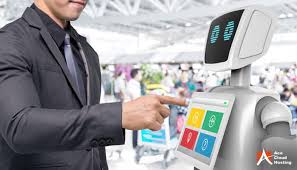 |
| "Revolutionizing the shopping experience: Artificial Intelligence in retail stores is transforming how customers shop." |
What is Artificial Intelligence in Retail?
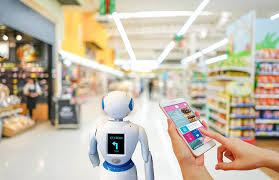 |
| "Discover how Artificial Intelligence is revolutionizing the retail industry by enhancing customer experiences and optimizing operations." |
How is AI Used in Retail Stores?
Chatbots and Virtual Assistants: AI-powered chatbots and virtual assistants help customers with queries, provide product recommendations, and assist with transactions.
Personalized Marketing: AI analyzes customer data to create personalized marketing campaigns, offers, and promotions.
Inventory Management: AI-powered inventory management systems predict demand, detect stock levels, and automate replenishment.
Supply Chain Optimization: AI optimizes supply chain operations, including logistics, transportation, and warehousing.
Predictive Analytics: AI-powered predictive analytics forecast sales, detect trends, and identify opportunities for growth.
Benefits of AI in Retail Stores
Improved Customer Experience: AI provides personalized services, enabling retailers to build strong relationships with customers.
Increased Efficiency: AI automates routine tasks, freeing up staff to focus on high-value tasks.
Enhanced Operational Efficiency: AI optimizes inventory management, supply chain operations, and logistics.
Increased Sales: AI-powered marketing campaigns and personalized offers drive sales and revenue growth.
Competitive Advantage: Retailers that adopt AI gain a competitive advantage over those that do not.
Table: AI Adoption in Retail:
| Retailer | AI Technology | Benefits |
| Walmart | Chatbots | Improved customer service |
| Amazon | Predictive Analytics | Increased sales and revenue growth |
| Target | Personalized Marketing | Enhanced customer experience |
| Home Depot | Inventory Management | Improved operational efficiency |
Facts and Figures
85%: of retailers plan to adopt AI technology by 2025 (Source: National Retail Federation)
70%: of consumers prefer personalized marketing (Source: Accenture)
50%: of retailers use AI-powered chatbots (Source: Retail Info Systems)
40%: of retailers use AI-powered predictive analytics (Source: McKinsey)
Pros and Cons of AI in Retail Stores
| Pros | Cons |
| Improved Customer Experience | High Implementation Costs |
| Increased Efficiency | Data Quality Issues |
| Enhanced Operational Efficiency | Job Displacement |
| Increased Sales | Dependence on Technology |
| Competitive Advantage | Cybersecurity Risks |
Conclusion
- Artificial intelligence is transforming the retail industry, enabling retailers to provide personalized services, improve operational efficiency, and increase sales. The integration of AI in retail stores has revolutionized the shopping experience, allowing customers to interact with retailers in new and innovative ways. From chatbots and virtual assistants to personalized marketing and predictive analytics, AI is changing the face of retail.
- As the retail industry continues to evolve, AI will play an increasingly important role in shaping the future of retail. Retailers that adopt AI technology will be better equipped to meet the changing needs of their customers, stay ahead of the competition, and drive business growth. In fact, a study by McKinsey found that retailers that adopt AI can expect to see a 10-15% increase in sales and a 5-10% decrease in costs.
- However, the adoption of AI in retail also presents challenges. Retailers must invest in the necessary infrastructure and talent to support AI implementation, and address concerns around data quality, job displacement, and cybersecurity. Moreover, retailers must ensure that AI is used in a way that is transparent, accountable, and aligned with customer values.
- Despite these challenges, the benefits of AI in retail far outweigh the costs. By embracing AI, retailers can:
- Enhance the customer experience: AI-powered chatbots, virtual assistants, and personalized marketing enable retailers to provide tailored services and build strong relationships with customers.
- Drive business growth: AI-powered predictive analytics and demand forecasting enable retailers to optimize inventory management, reduce waste, and increase sales.
- Improve operational efficiency: AI-powered automation and process optimization enable retailers to streamline operations, reduce costs, and improve productivity.
- Stay ahead of the competition: Retailers that adopt AI will gain a competitive advantage over those that do not, and be better positioned to respond to changing market conditions.
- In conclusion, the future of retail is AI-driven, and retailers that adopt AI technology will be best positioned to succeed in the digital age. By embracing AI, retailers can enhance the customer experience, drive business growth, improve operational efficiency, and stay ahead of the competition. As the retail industry continues to evolve, one thing is clear: AI is here to stay, and retailers that adopt AI will thrive in the years to come.
FAQs
What is AI in retail?
AI in retail refers to the use of machine learning algorithms and data analytics to automate and optimize various aspects of retail operations.
How is AI used in retail stores?
AI is used in retail stores to provide personalized services, improve operational efficiency, and increase sales.
What are the benefits of AI in retail stores?
The benefits of AI in retail stores include improved customer experience, increased efficiency, enhanced operational efficiency, increased sales, and competitive advantage.
References
National Retail Federation. (2020). The Future of Retail: A Report on the Adoption of Artificial Intelligence.
Accenture. (2019). Personalization in Retail: A Study of Consumer Preferences.
Retail Info Systems. (2020). The State of AI in Retail: A Survey of Retailers.
McKinsey. (2019). The Future of Retail: How Artificial Intelligence is Transforming the Industry.

No comments: